
Breaking the Stigma
A Global, Evidence-Based Perspective on Emotional Well-Being
For generations, mental health has been misunderstood, minimized, or hidden behind stigma. In many communities around the world, discussing emotional struggles has been viewed as a sign of weakness rather than a legitimate health concern.
But the truth is clear: mental health is health. The brain is an organ, just like the heart or lungs. When it is under strain, it deserves attention, care, and evidence-based treatment.
Breaking the stigma surrounding mental health is not only a social responsibility, it is a public health priority.
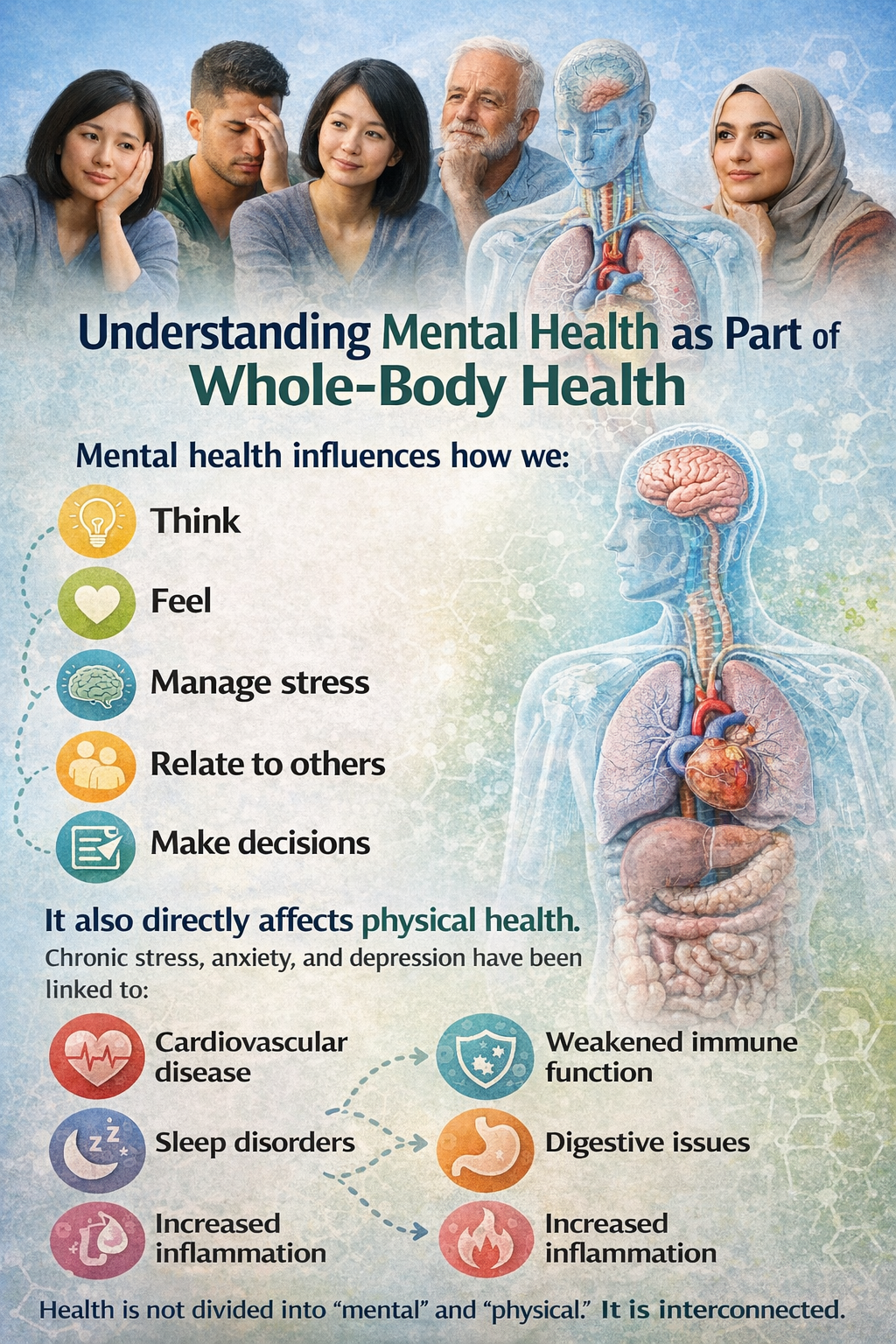
Understanding Mental Health as Part of Whole-Body Health
Why Stigma Persists

Despite growing awareness, stigma remains widespread across cultures and regions. Common misconceptions include:
“Mental health problems are a personal weakness.”
“You should just push through it.”
“Therapy is only for severe cases.”
“Talking about it makes it worse.”
Stigma often leads individuals to delay or avoid seeking help, which can worsen outcomes over time.
Breaking stigma starts with education and open conversation.
The Global Impact of Mental Health Conditions
Mental health conditions affect people worldwide — regardless of age, gender, nationality, or socioeconomic background.
Common conditions include:
Anxiety disorders
Depressive disorders
Post-traumatic stress disorder (PTSD)
Bipolar disorder
Substance use disorders
According to global public health data, depression is among the leading causes of disability worldwide. The economic and social impact extends to families, workplaces, and communities.
Addressing mental health improves both individual well-being and societal productivity.
Signs That Mental Health Support May Be Needed
Everyone experiences stress and sadness at times. However, professional evaluation may be appropriate if symptoms:
Persist for weeks or longer
Interfere with work, school, or relationships
Affect sleep or appetite
Cause frequent emotional distress
Lead to withdrawal from social activities
Early intervention often leads to better long-term outcomes.
The Role of Community and Culture
Cultural beliefs strongly influence how mental health is perceived.
In some regions, emotional struggles may be expressed through physical symptoms such as fatigue or headaches. In others, silence and endurance are culturally valued.
Breaking stigma does not mean rejecting culture. It means integrating mental health awareness into culturally respectful frameworks.
Community leaders, educators, employers, and healthcare providers all play important roles in normalizing mental health conversations.
How to Support Someone Experiencing Emotional Struggles
If someone confides in you:
Listen without judgment
Avoid minimizing their experience
Encourage professional support when appropriate
Offer practical help if needed
Respect their privacy
Simple validation — “I’m glad you told me” — can reduce isolation.
Workplace Mental Health: A Growing Priority
In fast-paced global work environments, mental health is increasingly recognized as essential to performance and safety.
Organizations can reduce stigma by:
Providing mental health education
Encouraging use of employee assistance programs
Promoting work-life balance
Training leaders to recognize burnout
Psychological safety supports productivity and reduces absenteeism.
Mental Health Care Is Not One-Size-Fits-All
Treatment options may include:
Psychotherapy (talk therapy)
Cognitive behavioral therapy (CBT)
Medication when clinically indicated
Lifestyle modifications
Stress management programs
Community-based support groups
Access to care varies globally. Telehealth services are expanding in many regions, increasing accessibility.
Individuals should consult licensed healthcare professionals for personalized assessment and treatment planning.
The Importance of Early Education
Teaching children and adolescents about emotional regulation, coping skills, and resilience can reduce long-term stigma.
Schools and families can encourage:
Emotional vocabulary development
Healthy communication
Stress management techniques
Help-seeking behaviors
Prevention begins with awareness.
Common Myths About Mental Health
Myth: Mental illness is rare.
Reality: Mental health conditions are common worldwide.
Myth: Therapy means something is “wrong” with you.
Reality: Therapy is a proactive tool for growth and coping.
Myth: Strong people handle problems alone.
Reality: Seeking help is a sign of strength and responsibility.
Breaking the Stigma Starts With Language
How we speak about mental health matters.
Replacing phrases like:
“Just get over it”
with
“How can I support you?”
… changes conversations.
Open dialogue reduces fear and encourages early care.
Compliance & Healthcare Disclaimer
This content is intended for educational purposes only and does not constitute medical advice, diagnosis, or treatment. Mental health conditions vary in severity and require individualized assessment by licensed healthcare professionals. If you or someone you know is experiencing severe emotional distress, thoughts of self-harm, or a mental health crisis, seek immediate assistance from local emergency services or a qualified healthcare provider. Resources and availability vary by country and region.
Final Thoughts: Health Includes the Mind
Breaking mental health stigma is not about labeling people, it is about recognizing humanity.
Mental health is not separate from physical health. It is part of total well-being.
When we normalize conversations, encourage early support, and treat emotional health with the same seriousness as physical conditions, we create stronger individuals, families, workplaces, and communities worldwide.
Mental health is health. And it deserves care, respect, and action.