
Mental & Emotional Health: Managing Stress in a Fast-Paced World
Mental & Emotional Health: Managing Stress in a Fast-Paced World
A Practical, Evidence-Based Guide to Building Resilience Globally
In today’s fast-paced world, stress has become a nearly universal experience. From demanding workplaces and financial pressures to digital overload and family responsibilities, people across continents face increasing mental and emotional strain.
While short-term stress can sharpen focus and improve performance, chronic stress can negatively impact both mental and physical health. The goal is not to eliminate stress entirely — it is to manage it effectively and sustainably.
This guide explores practical, science-informed strategies to protect mental and emotional health in modern life.
Understanding Stress: A Biological Response
Stress is the body’s natural reaction to perceived challenges or threats. When activated, the nervous system releases hormones such as cortisol and adrenaline. These hormones increase heart rate, sharpen alertness, and prepare the body for action.

However, when stress becomes prolonged or unmanaged, it may contribute to:
Anxiety and irritability
Sleep disturbances
Weakened immune function
Digestive issues
Elevated blood pressure
Difficulty concentrating
Emotional exhaustion or burnout
Chronic stress is increasingly recognized as a global public health concern.
Why Stress Feels Stronger in a Fast-Paced World
Modern stressors differ from historical survival threats. Today’s triggers often include:
Constant digital connectivity
Work-related performance pressure
Economic uncertainty
Academic competition
Caregiving responsibilities
Exposure to distressing news
Unlike temporary physical danger, these stressors may be ongoing — giving the body little time to recover.
Managing stress effectively requires intentional recovery practices.
1. Prioritize Sleep as Emotional Recovery
Sleep is essential for emotional regulation. During rest, the brain processes experiences and reduces stress hormone levels.

Chronic sleep deprivation may increase:
Emotional reactivity
Anxiety symptoms
Difficulty coping with daily challenges
Aim for 7–9 hours of quality sleep for adults. Establish consistent sleep schedules and reduce late-night screen exposure when possible.
2. Practice Structured Stress Reduction
You do not need hours of meditation to benefit from stress management. Even short daily practices can help regulate the nervous system.

Evidence-supported techniques include:
Deep diaphragmatic breathing
Progressive muscle relaxation
Mindfulness meditation
Guided imagery
Gentle yoga or stretching
Even 5–10 minutes daily can reduce physiological stress markers.
3. Set Healthy Digital Boundaries
Technology connects the world, but constant notifications can overwhelm the brain.

Consider:
Designated “no-screen” periods
Turning off non-essential notifications
Avoiding distressing news before bedtime
Scheduling focused work blocks
Reducing digital overload improves concentration and emotional balance.
4. Move Your Body Regularly
Physical activity is one of the most effective natural stress regulators.

Exercise helps:
Lower cortisol levels
Release endorphins
Improve sleep quality
Enhance mood
You do not need intense workouts. Walking, cycling, dancing, or swimming, even 20–30 minutes, can significantly reduce stress.
5. Strengthen Social Connections
Humans are biologically wired for connection. Supportive relationships improve emotional resilience and reduce feelings of isolation.

Across cultures worldwide, strong community ties — family, friendships, faith groups, or local networks — provide psychological protection during stressful times.
Make intentional space for:
Meaningful conversations
Shared meals
Community involvement
Peer support
Social support is a protective factor against burnout and depression.
6. Organize Priorities to Reduce Mental Overload
Feeling overwhelmed often stems from unclear priorities.

Try:
Writing a short daily task list
Identifying your top three priorities
Breaking large tasks into smaller steps
Scheduling realistic deadlines
Structure reduces uncertainty, and uncertainty fuels stress.
7. Maintain Physical Health Foundations
Mental and emotional health are deeply connected to physical health.

Support your body through:
Balanced nutrition
Adequate hydration
Limiting excessive caffeine or alcohol
Regular preventive healthcare
Physical imbalances can worsen emotional stress responses.
Recognizing When Stress Requires Professional Support
Occasional stress is normal. However, professional support may be necessary if you experience:
Persistent anxiety
Frequent panic attacks
Prolonged sadness
Difficulty functioning at work or home
Sleep disruption lasting weeks
Thoughts of self-harm
Seeking help is not a sign of weakness. Mental health professionals, counselors, psychologists, and licensed physicians can provide evidence-based care.
Early intervention improves long-term outcomes.
Workplace Stress and Burnout
Globally, workplace stress is a leading contributor to emotional strain.
Organizations can support employee well-being by:
Encouraging realistic workloads
Promoting regular breaks
Supporting flexible schedules when possible
Providing mental health resources
Employees benefit from:
Clear boundaries between work and personal time
Taking scheduled leave
Communicating workload concerns constructively
Sustainable productivity depends on mental resilience.
Common Myths About Stress
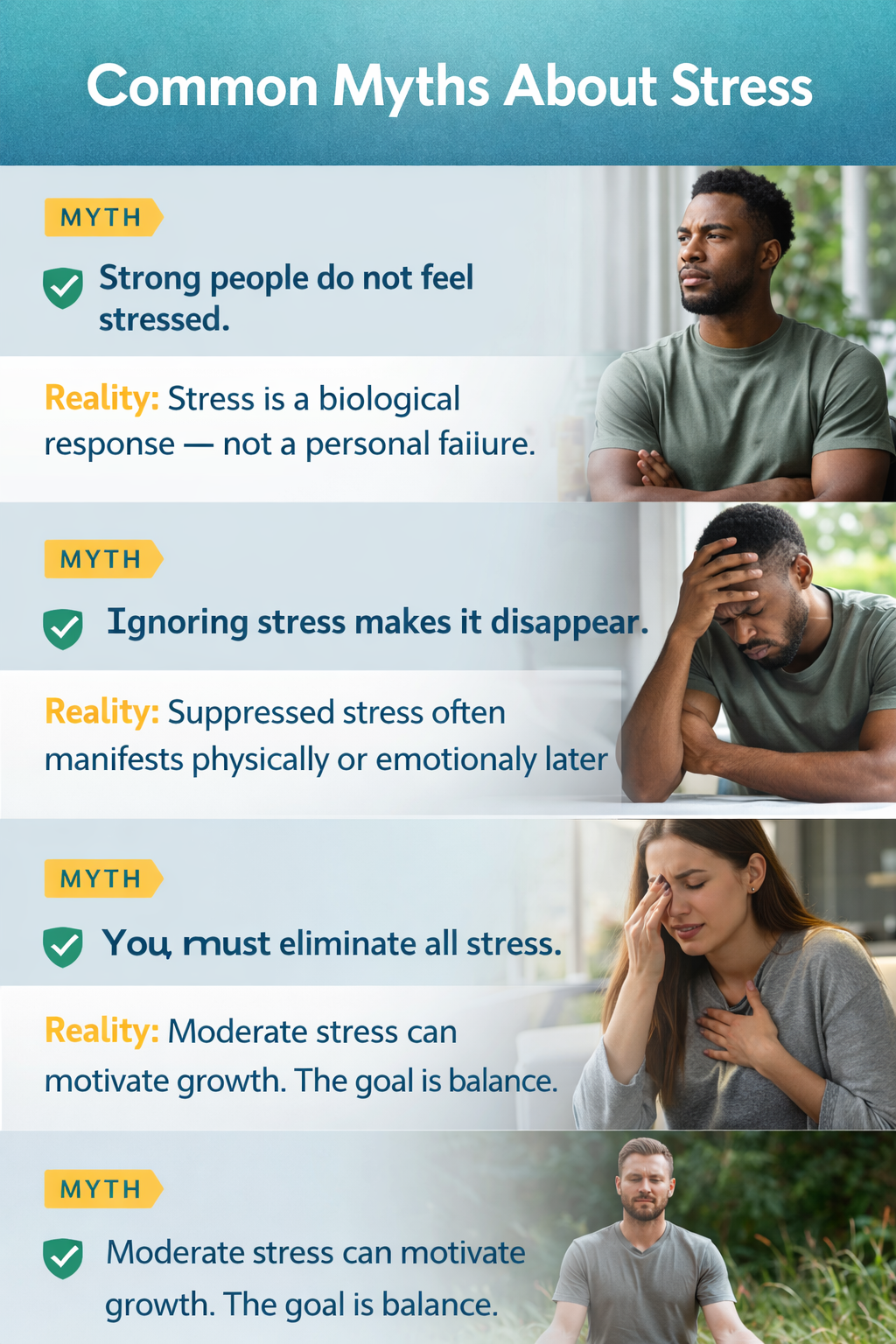
Myth: Strong people do not feel stressed.
Reality: Stress is a biological response — not a personal failure.
Myth: Ignoring stress makes it disappear.
Reality: Suppressed stress often manifests physically or emotionally later.
Myth: You must eliminate all stress.
Reality: Moderate stress can motivate growth. The goal is balance.
Building Long-Term Emotional Resilience
Resilience is not about avoiding difficulty. It is about developing the skills to recover.
Daily resilience-building habits include:
Gratitude practices
Healthy self-talk
Continuous learning
Time in nature
Spiritual or reflective practices (if culturally appropriate)
Seeking support early
Small daily actions protect long-term mental health.
Compliance & Healthcare Disclaimer

This content is for educational purposes only and does not constitute medical advice, diagnosis, or treatment. Mental health conditions vary in severity and require individualized care. If you are experiencing severe emotional distress or a mental health crisis, seek immediate assistance from a licensed healthcare provider or local emergency services. Public health resources and mental health services vary by country and region.
Final Thoughts: Slowing Down to Move Forward
In a world that constantly demands more, protecting your mental and emotional health is an act of responsibility — not indulgence.
You cannot control every external stressor.
But you can strengthen your internal resilience.
Managing stress in a fast-paced world begins with awareness, continues with daily habits, and grows through community and professional support when needed.
Your mental health is foundational to every other area of life. Prioritize it consistently.